Fine-Motor Fun: 12 Everyday Activities That Build Little Hands
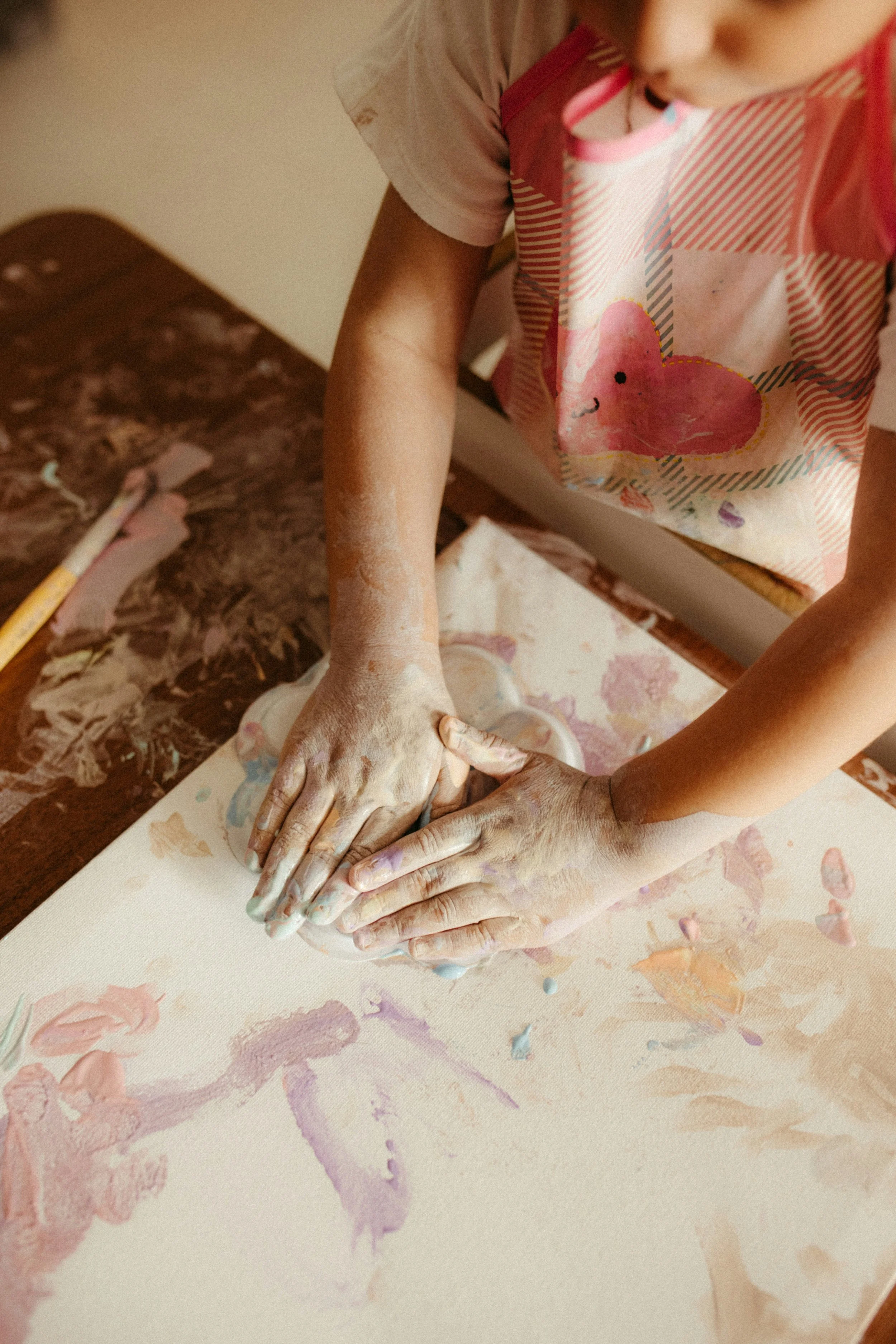
A child’s paint-covered hands making art.
Little hands find plenty to do in an ordinary home: opening containers, pressing dough, turning pages and carrying treasures from one place to another. Fine-motor play does not need to look like preparation for a test. Offer materials your child can explore comfortably, then let their ideas lead. These invitations are a menu, not a developmental checklist, and you can repeat a favourite rather than trying everything.
The National Association for the Education of Young Children describes how playdough play supports small hand muscles and other learning. Keep the emphasis on enjoyable exploration rather than promising that any activity will produce better handwriting.
Supervise closely, follow product age labels and keep small parts away from children who mouth objects. Choose washable, child-appropriate materials. If your child has pain, loses an established skill or finds everyday hand tasks unusually difficult, discuss those observations with their doctor or occupational therapist.
Squash and roll playdough.
Offer a soft lump and let your child press it flat, roll a long shape or pinch a pretend animal. A large child-safe cutter adds another possibility. Check ingredients for allergies, keep dough out of mouths and put it away if it becomes a source of frustration rather than play.
Tear paper for a collage.
Use scrap paper or a clean paper bag without staples or handles. Demonstrate starting a tear, then let your child choose the pieces. They can arrange them without glue first. The picture does not have to resemble anything; exploring the paper is a complete activity on its own.
Move a sponge between bowls.
Put a little water in a shallow bowl on a tray and offer a clean sponge to squeeze over another bowl. Stay right beside your child and empty the water afterwards. Keep towels nearby, and choose a sponge large enough not to become a small loose play piece.
Peel and place large stickers.
Lift an edge if getting started is difficult. Your child can decorate scrap cardboard, make a path or cover a drawn shape. Avoid insisting that stickers go inside lines. Keep backing scraps contained and choose a different activity for children likely to put stickers in their mouths.
Build with comfortable-sized blocks.
Invite your child to make a garage, a wall or a home for a toy animal. Use blocks appropriate for their age and abilities. Our ideas for exploring letters through play can offer a later extension, but the building does not need an alphabet lesson attached.
Draw on a large sheet.
Tape paper to a stable table and offer chunky, age-appropriate crayons. Make roads, swirls or weather marks together. Let your child choose a comfortable hand and position rather than correcting every movement. Stop if they seem uncomfortable, and keep the invitation open for another day.
Turn sturdy book pages.
Settle beside your child with a board book and let them handle the turning. Separate a page edge when needed. You can enjoy the pictures without reading every word. Taking care of a familiar book can be more inviting than a task presented as hand practice.
Explore easy clothing fasteners.
Offer a familiar coat with a large zip or a dress-up garment with accessible hook-and-loop tabs. Hold the fabric steady while your child tries. Keep cords and loose decorations out of the activity, and offer help before the task becomes a battle about independence.
Fold small cloths.
Lay a clean washcloth flat and bring its edges together. Your child may prefer rolling it into a pretend sleeping bag for a toy. Accept the result rather than refolding it in front of them. Household participation can include imperfect folds and a different approach from yours.
Open safe containers.
Gather sturdy, empty containers with easy lids, avoiding anything that held medicine or cleaning products. Put a large toy inside and invite your child to discover it. Check for sharp edges and pinch points. Loosen a tight lid so effort does not turn into a strength contest.
Brush water onto an outdoor surface.
In suitable weather, offer a broad brush and a shallow container of water for painting a fence or pavement. Stay nearby and avoid slippery walking areas. Indoors, a water-painting mat offers a similar invitation without needing to manage a wet floor.
Make a simple paper project together.
Fold a card, press down tape or crumple paper into pretend food. Learning Kindred’s everyday fine-motor activity ideas can help you find another invitation when you want variety. Choose projects with manageable steps and leave space for your child to change the plan.
Leave a favourite material within your shared play routine and put the rest away. Your child does not need to finish a set of exercises to have a useful afternoon. A satisfying squeeze, a wonky tower or a page turned independently can be enough reason to return tomorrow.