Little Helpers in the Kitchen: 8 Ways to Cook With Kids
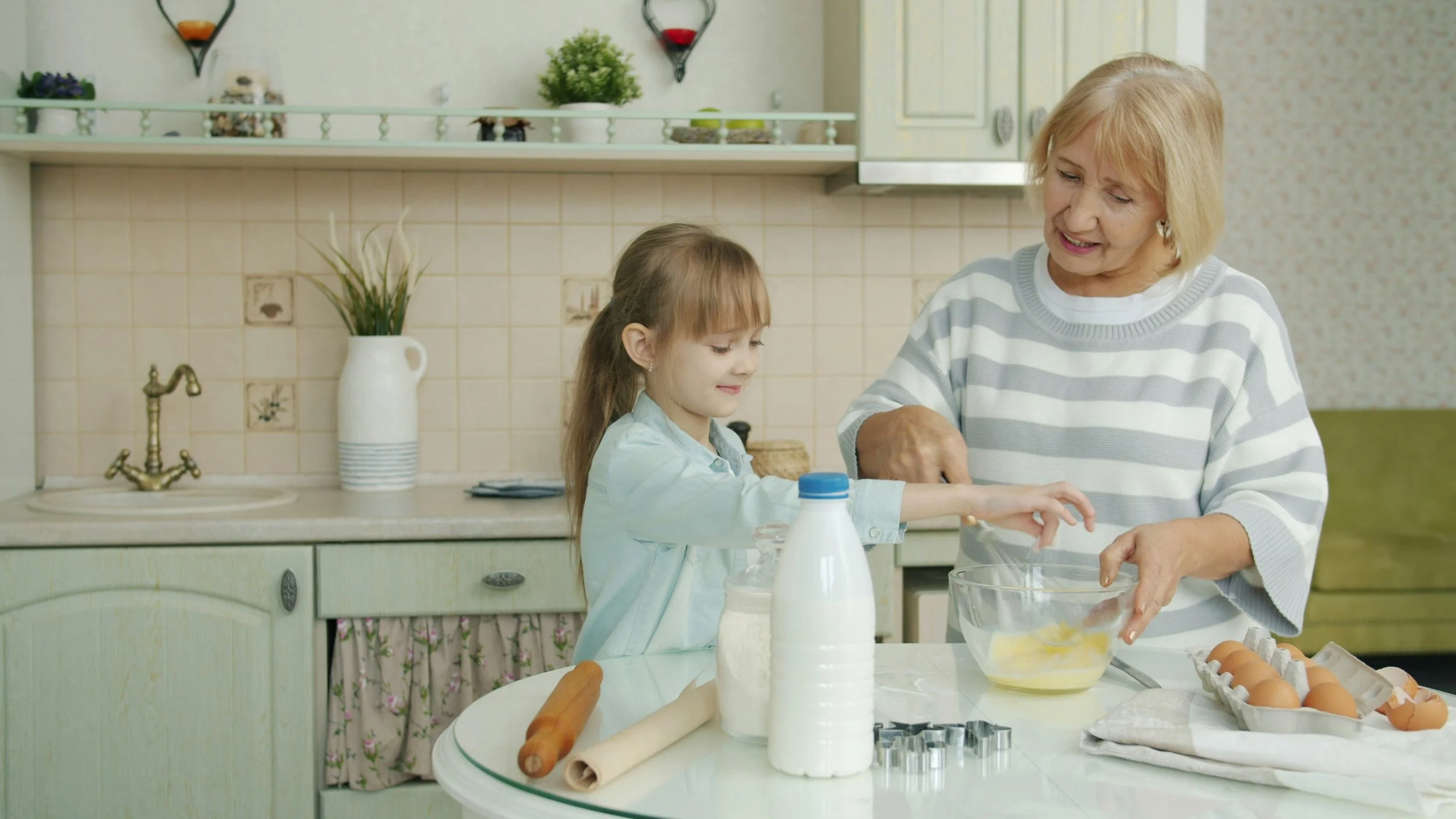
A grandmother and child mixing pastry ingredients together in a kitchen.
Cooking with children works best when being together matters more than finishing quickly. There will be spills, uneven pieces and moments when the adult needs to take over. Start with a meal you already know and a job your child can genuinely do. You do not need a special recipe, matching aprons or a whole afternoon. A small contribution to an ordinary meal can be a satisfying place to begin.
Choose a forgiving job.
Invite your child to tear lettuce, arrange cooled ingredients or stir something in a large bowl while you stay nearby. Match the task to their skills and the food’s safety needs, not just an age printed on a kitchen tool. You know whether a particular job needs your hands beside theirs.
Give the task a clear beginning and end. “Put these leaves in this bowl” is easier to follow than “Help with dinner.” Let your child decline or stop without making participation a test of helpfulness.
Set up before inviting them over.
Clear space, gather the ingredients and choose a stable working position suited to your child. Keep knives, hot liquids, cords and appliances out of reach until an adult is using them. Do not rely on a verbal warning to make a dangerous area safe.
Explain the boundaries before starting: the adult handles the oven and hot pans, and everyone pauses when asked. Close supervision matters even with a familiar task. If you cannot supervise properly while cooking the main meal, choose a separate cold preparation activity instead.
Make handwashing and cleanup part of the recipe.
Start with clean hands and equipment, and clean up again after handling raw ingredients. Keep raw foods separate from foods that are ready to eat. Give your child a cloth for an ordinary spill while an adult handles anything involving raw ingredients or broken items.
The FDA’s guidance on handling flour safely explains that raw flour and raw eggs can contain harmful bacteria. Do not taste raw dough or batter, and do not give children raw dough to play with. Follow the recipe and package cooking instructions rather than guessing when food is safe.
Let measuring stay practical.
Offer a scoop and a larger container to catch spills. Read the recipe together and show what level, full or empty looks like. For recipes where accuracy matters, an adult can measure while a child tips the prepared ingredient into the bowl.
There is plenty of everyday STEM learning in the kitchen, but dinner does not need to become a maths test. You might notice that the same bowl looks fuller after adding another ingredient, or compare a large spoon with a small one. Leave room for ordinary conversation too.
Use language that describes rather than pressures.
Talk about a food’s colour, smell, shape or texture without promising your child will like it. “The cucumber feels cool” gives them something to notice. “You made it, so you have to eat it” turns helping into an obligation.
Let preparing and tasting be separate choices. Avoid sampling ingredients that are unsafe raw, and follow any individual allergy or feeding guidance. If you have concerns about swallowing, persistent distress around eating or nutrition, ask your child’s clinician for advice rather than treating kitchen participation as a solution.
Give them a real decision.
Your child might choose which safe serving bowl to use, where to place the napkins or which familiar vegetable to wash. Keep choices within the meal and your budget. There is no need to hand over the whole menu for the contribution to matter.
For a busy week, decide ahead of time which meals have room for a helper. These ideas for weekly meal planning with a busy family can help connect preparation to the food you already intend to make. Participation should fit your week, not require a separate shopping trip.
Accept a different-looking result.
A sandwich assembled sideways can still be a sandwich. Unless a change affects safety or the recipe’s ability to cook properly, resist immediately redoing the work. Describe what your child completed: “You put the filling on all the pieces.”
If something needs fixing, explain why and do it together. “This part is too close to the edge, so it might spill when we move it.” Children can learn that adjustments belong in cooking without hearing that their contribution was wrong.
Finish while there is still some enjoyment left.
Helping can end before the meal is ready. Let your child wash up and move on while you handle the hot stage. Include a manageable cleanup job if they have capacity, but keep supervision and safety ahead of finishing every task.
Later, acknowledge the contribution without exaggeration: “You helped get dinner ready.” Keep the useful tools nearby for another day. The aim is not to produce a tiny chef on demand. It is to make the kitchen a place where your child can join real family work, safely and at their own pace.